My Summer of Monarchs & Milkweed: Lessons Learned from Nature's Design and How to Help Protect Monarch Butterflies


Sept. 9, 2026

I had no idea what I was getting involved with last November 17th when I planted "The Monarch Highway Seed Mix" from American Meadows in seven large pots behind my Mom's garage. I covered the pots with their upside-down saucers to keep the squirrels out. The previous year, we had eight baby cottontail bunnies born in one of my Mom's large pots of thyme and other herbs on our deck. I have learned to cover the pots to over-winter the seeds so they are not eaten, or so the squirrels don't use them for hiding their acorns. Yet none of this prepared me for what has felt very much like a "Monarch Montessori Summer School" educational camp– three months of everything milkweed, caterpillars and butterflies. The Swamp milkweed I'd planted in that Monarch Highway mix last November came up in the pots, surrounded by other perennials. When it was about two feet tall in late May, I took those clumps in the pots and moved them, transplanted them just as they were, into my Mom's perennial pollinator gardens, which never before had any milkweed in them, but were established, beautiful nectar gardens for bees, butterflies and birds.

Swamp Milkweed (Ascelpias incarnata)


My six patches of Swamp milkweed grew tall. They were three feet tall and climbing on July 16th, 2026, when the first Monarch Butterfly was spotted flying though our backyard. It was a female, and she landed on the patch in the backyard that was the least protected– a patch of 4 stalks up against the fence, just past the hostas and lilac tree. A sort of "no one goes here" spot, where the AC compressors push hot air towards the fence, but it was still tranquil and almost like a little secret path that led to the Connecticut origami flower tree (I call it) and ended with a tall plum tree. I eventually became so invested in this project to save the Monarchs, that I purchased an AC fencing piece to divert the airflow away from the caterpillars so it would not blow on their chrysalises. I was surprised how well it works.

Before I could blink an eye, we suddenly had big, beautiful Monarch caterpillars on this hidden patch by the fence in the backyard. I marveled at the tiny ones, with the cutest little 2mm bodies and stripes, and the gorgeous, bold stripes of the fat, happy, vegetarian 3rd to 4th instar caterpillars. Their designs are so vivid and fun. I even made a visual infographic to help teach about the caterpillars instars, or periods between molts.

Monarch Caterpillar Instars: Infographic by CPROPPE.com 

But then, a natural disaster of intense predation struck- paper wasps and yellow jackets were patrolling all the Swamp milkweed patches and eating the caterpillars. I saw two get murdered in front of my very eyes on that backyard patch that had been a last minute place to transplant the 6th pot of milkweed. It was horrible to see, and worse to learn that this was not going to stop. All Summer long, the wasps patrolled our plants for caterpillars. I put up two traps; a Rescue! Trapstix one, and a homemade one with Apple Cider vinegar and beer, and neither one worked. They both trapped lots of flies and maybe just one wasp. From all that I've read and researched online, it was probably too late in the season for me to catch the wasps. Everyone seems to explain that you have to catch the wasps with the traps in the Spring to reduce their presence in pollinator gardens later in the Summer. 

Watch my video recap of my "Monarch Sanctuary Project" here and 

a full list of my Monarch videos, here.

Waiting for it to drop into the 60s, when the wasps disappear into the ground is not really an option anymore, because we have high temperatures into October now. Today is September 8th and it's in the 80's today. Even if it is getting cooler some evenings, the change in climate causes the wasps to have a longer lifecycle and remain active through the Fall. In other words, many people are now protecting Monarch eggs in their yards because of the wasps. I had no idea this was a major issue, or a gardening "thing" that many people in America actually do regularly- they "raise Monarchs" outside in their yards.

@The_Monarch_Movement on Instagram

One of the most unbelievably beautiful conservationists in this area is a woman in Michigan, Jennifer Baker. Her work involves protecting the Monarchs at a large scale were she has released over one thousand butterflies in a Season. She designed industrial grade "Monarch and Milkweed Houses" that she plans to sell on Etsy. You can see them on her Instagram account @The_Monarch_Movement . Jennifer tags her butterflies with the tracking stickers from Monarch Watch. Monarch Watch is a non-profit that was started in 1992 and continues to this day. They also work with a newer tagging program that adds GPS tracking to the Monarchs called Project Monarch. This group even has an app where you can see where the tracked butterflies are. They claim these trackers do not harm the butterflies, but I don't like the idea of adding anything like this to these beautiful creatures of nature. The main point of the tracking is to get an idea of the routes the butterflies take to their overwintering sites in Mexico, Florida and California. The majority migrate to Mexico where they overwinter and begin their flights back in the Spring. The entire migration cycle takes 4 generations of Monarchs. There has been a huge reduction in the number of Monarch Butterflies over the years, and all this tracking and research is supposed to help them survive as we learn more about them. However, my basic take on this is that we can protect them simply by doing just a few things better.

Don't spray the Trees! Save the Monarchs

Here is my list of how to save the Monarchs, learned from my own backyard research as I have protected 30 caterpillars this Summer and released 19 so far....

1. Plant milkweed in your yards. I planted the Swamp milkweed and the Monarchs came and laid hundreds of eggs in our yards. Milkweed is a perennial that will come back next Spring. Swamp milkweed is not aggressive and grows in small clumps, while Common Milkweed is very aggressive and will spread by runners, taking over a perennial garden. This was why I chose the Swamp milkweed to add to our smaller, already well established perennial gardens. If you have a lot of space, you can plant all three kinds that are recommended: Common Milkweed, Swamp Milkweed and Butterfly Weed.

2. Protect the caterpillars from wasps. I was so excited when we got eggs in every single one of the six patches of Swamp milkweed I planted, but I suddenly felt responsible when the wasps started eating them. Oh no, I thought... this is my fault! I made the butterflies think this was a safe place, but it's not! Well, it's safe if you can protect some of them and begin a plan to eradicate more wasps in the Spring in the coming years. So, I decided to protect some of the eggs and caterpillars. I put a square tomato cage over the patch by the fence, and bought black tulle netting at Michael's Art Supply. Then I constructed a 2 foot deep, by 1 foot wide, by 4 feet tall structure that is entirely outside and open to the air on 3 sides. I buried the tulle netting with large gravel at the bottom and used additional sod staples to keep the netting down in the ground and anything from crawling underneath. The plants were able to continue growing and are still alive, though they have been through several months of caterpillars. My original patch had about 15 eggs on the plants. 9 of those had made their chrysalises by August 9th, 2026, and there were 6 more the next day. That first batch of 15 butterflies was beautiful to release and watch. Now, I am getting about one a day, and this is allowing me to release a single butterfly and follow it in the yard to make sure it makes it to flight and safety.

3. Monarchs need pesticide free TREES and nectar flowers. This is a big one. In the first day of a Monarch Butterfly's life, it ecloses from the chrysalis, dries and hardens its wings, and begins flapping around in an outdoor enclosure in 1-3 hours. However, it is not ready to safely fly until about 3 hours after hatching, and this varies depending on the temperature and if it's sunny or not. For example, I released a Monarch yesterday that was placed on Bidens aritosa in the sun to dry, and it was attacked by a wasp. I rescued it, and put it up in a burning bush tree about 12 feet up. It was able to rest there for an hour, practice using it's wings and jump around to different leaves before it finally took a long, graceful flight into the sun, or slightly South West of the sun. The Monarchs use the trees to sleep and rest. While they are in the trees, they fold their wings flat so they look like a leaf. It is almost impossible to see a monarch in a lush canopy of a tree, unless it opens its wings to show its gold and orange color against the green foliage. Most of the time, the Monarchs I have released have flown up into trees about 20 feet up, upon release. They do not go to flowers to eat nectar in the first 24 hours. I have never seen this happen. They are doing something else, whether that is preparing their new bodies for eating, flight, vision, etc... the Monarchs go high up into the trees and stay there for a good long time before flying again. I have even seen them fly from tree to tree on the first day, but never have I seen them go directly to a pollinator garden of flowers on the first day. So, please, do not spray your trees with pesticides or your yards. They are deadly to Monarchs and there is proof of this in many similar studies (usgs.gov link to study of 15 pesticides).

4. Don't put them on flowers or in a pollinator garden with other pollinators only 3 hours after eclosure or on their release day. They could potentially be attacked by wasps and are not yet strong enough to defend themselves. Put them high up in a sunny tree where there are no visible spider webs. If there is no sun, or it is rainy, they will likely go high up into a tree and stay there until the next morning or the first moments of sunshine the next day. I have witnessed two male monarchs fly 20 feet up into a Dogwood tree on their first day, a female spend the entire night 20 feet up in a holly tree and come down to the pollinator garden at noon the next day, and another female spent the entire afternoon until sunset in a sunny Burning Bush tree, eventually flying up higher into a cedar tree, as the sun moved. They are not interested in feeding when they first eclose (hatch). Eclosure is from French, and means "to come into the light". I like to think of every new Monarch Butterfly as a birth. They have just landed in your neighborhood and need to get adjusted. They hang out (literally), eventually open and close their wings to regulate their heat and make sure everything is in working order. They move their heads from left to right. Adjust their antennae and begin sensing millions of different things with the antennae, from chemical pheromones to temperature and direction. They adjust with the sun as the sun moves across the sky. They learn how to hang onto a leaf and flap to jump up on top of that leaf. 


The first time they try to go from hanging under a leaf to up on top, they look like they are crawling and are unsure of themselves. Later, they might flap rapidly, like a moth, not knowing what they are doing, also trying to get up on top of that leaf. Finally, they do a perfectly executed move, I have been calling a "jump-flap" where they quickly and beautifully synchronize the wings with the jump and land perfectly on top of the leaf. They do all this on their first day. Their eyesight and muscles are warming, their wings are hardening, and their senses are sensing other insects flying, birds, new scents, new colors and surroundings. They are preparing to be active butterflies as we normally think of a flitting and floating butterfly, very soon. They are not quite ready yet, but tomorrow, you might see them flying gracefully through your flower garden, perfectly soaring over each flower and landing on the one they will very briefly drink nectar from... and then, they are off again, as fast as they landed. Safely protecting themselves from predators on the second day, they now have perfected their speed and flight to avoid most predators in the first place. Their agility and "I can't sit still near a pollinator garden" are what keep them safe by day, and by night, they roost in trees, disguised as a leaf. They are beautiful by nature's design, and should always be protected. We can not let climate change, pesticides or the wasps win. To love and protect a Monarch, we must understand their needs and they need all three things: Milkweed, pesticide free trees and pollinator gardens with limited wasp and spider encounters.

As an artist, I am absolutely in awe of the design of the Monarch, from elegantly sculpted egg that attaches beneath an umbrella like leaf that protects it from rain. The sustainable egg is eaten by the hatching caterpillar, who begins to eat tiny circles in the leaf it hatched on. It develops beautiful, colorful stripes that signal to us, "This is a special looking caterpillar. Wow, look at all those colors!" Then, the chrysalis of green and gold that shines in the dark and light. When it darkens, it signals eclosure is imminent. The chrysalis is used by the newly hatching butterfly to spin and twist its wings straight and dry. The butterfly itself, with dashed and spotted, painted wings of gold and black that shine in the sun and contrast warmly against the blue or grey sky. These are flying jewels of our world, many believe to be spiritual and symbolic of the soul. To see a Monarch in flight in Summer and not stop to marvel at its' beauty and journey to flight seems almost sacrilege– only 1-5 out of every 100 caterpillars survive to become butterflies. In some ideal instances, the percentage can be up to 20 percent, while least favorable scenarios can produce only 1 percent. By protecting the caterpillars, we can at least get them to flight in the world. This still does not save them from spiders, and birds later in life, but what an honor to release a Monarch into the sky and see that design that has been marveled at by the Egyptians and painted in art and fashion throughout time. How lucky we are to witness nature and its pure innocent color and motion, from the swaying meadows to the fluttering butterfly and zooming bees. Nature is movement and timeless creation. To lose any of this completely due to man's ignorance is completely unacceptable. So we work to save and advocate for healthier ways of caring for nature, because we must.

Dec. 21, 2025 Seascape Painting with Lighthouse

 December 21, 2025

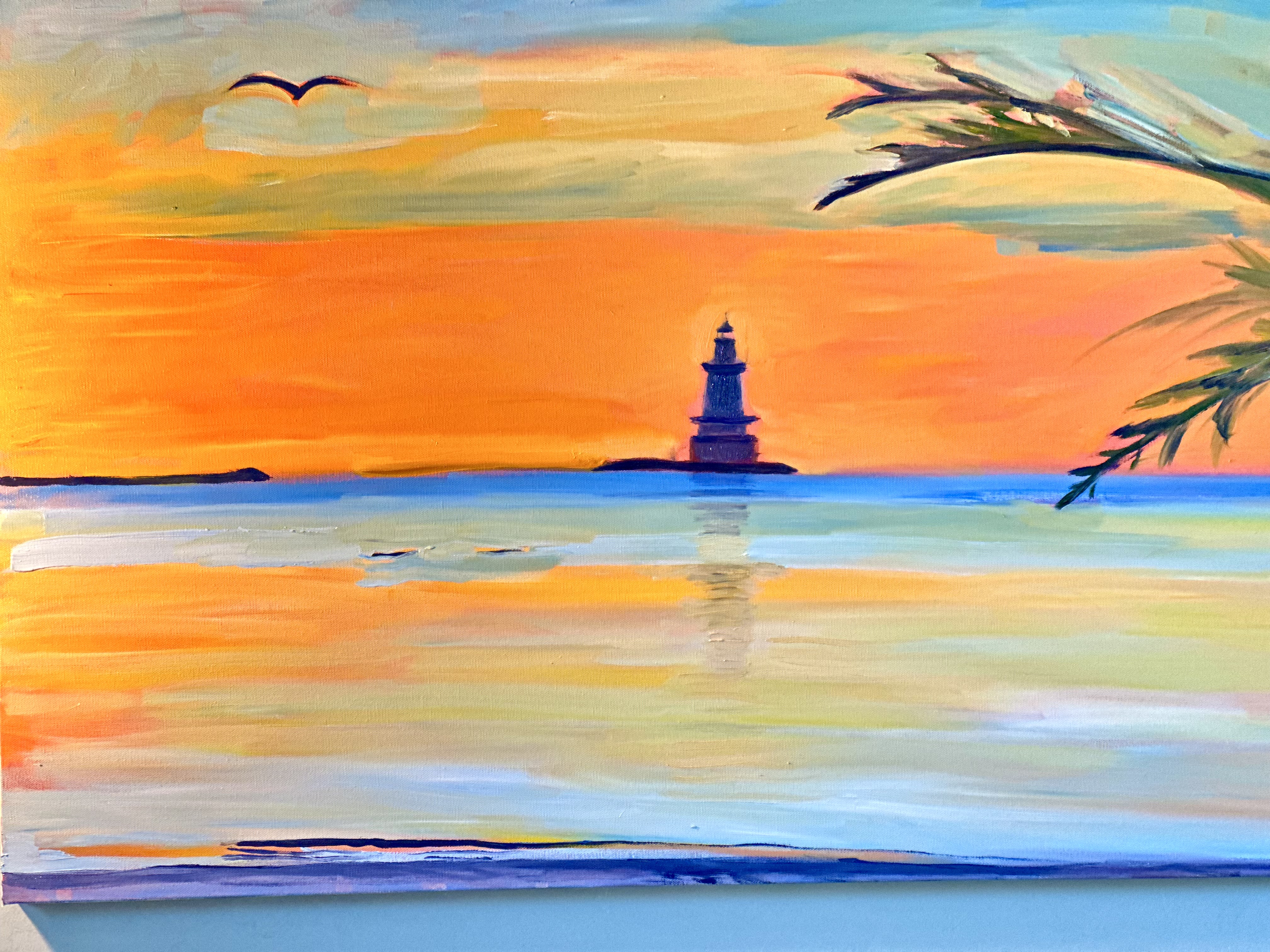
I am working on a large (48" x 36", 4 ft x 3 ft) seascape, oil painting this month, depicting my hometown beach and the local lighthouse that is being restored. It will also include sailboats, bikes, native flora and birds. There is a Babboe cargo bike in the scene so far... perhaps, one or two more bikes will be added before it is finished. A portion of the proceeds will go to Ocean Conservation non-profits I support, including TheOceanCleanup.com and the Stamford Lighthouse Restoration Project.

Painting by C.Proppé - Stamford Lighthouse from Seaside Center

This painting is a combination of things I love from my hometown beach– the places I grew up swimming and sailing, the historic stone buildings and architecture, and the local gardens that have been cared for by friends and family in the local garden club and conservation societies. It is not an exact replica of the view, but a design that seeks to bring what if feels like to spend time here all into one image.


Note on sustainability and the future:

The area is a lot more populated than when I was a kid. Stamford, CT has grown and there is visible smog over the city from the ocean in the Summer. There are more boats and overfishing. Some of the tiny coves here are just 1 foot deep in places when the tide is low, and slippery mud lines these areas. This is where young kids learn to swim and sail, so I especially want to remind people to care for our waterways and not pollute here. If you can afford electric boats and sailboats, please do what you can to prevent further pollution of our favorite places. Donating to other non-profits, including Friends of Greenwich Point and Save the Sound are really important! They are determining where the most toxins are coming from in our local rivers, such as those that are damaging Byram Beach.

I have done many "cove cleanups" removing Ocean Plastic over the years, after my bike rides. I know others pick up the trash too, and there are pails provided to help out by Green and Clean. If you live near on or near the ocean, please refrain from using harmful fertilizers, pesticides and please, garden organically. Let's keep the places we love as safe as possible for fish, wildlife and our kids.

Despite the fact that oil paints last forever and their color does not fade in a lifetime, I am planning to switch to earth-friendly paints when my remaining supplies are depleted. My process does not wash any toxins into our water supply. All paint is cleaned from brushes with recycled paper and goes into trash that is incinerated. Still, I've been breathing the paint for decades and getting it on my hands, and I'm ready to move on to something safer for me and the planet. If you are interested in purchasing this painting in CT or the NYC Metropolitan area, please get in touch at CProppe.com/paintings or CProppe.com/shop

Thank you, and Happy Holidays! -Colleen


Fall Rides: 🍁Leaves, Bike Lights and Reflective Apparel

 November 5, 2025

Biked 21 miles today, through stunning fall colors and sunlight reflecting in the creeks and rivers. Hope you will get out and enjoy the colors. If you would like to match my miles with a donation to The Ocean Cleanup, visit my link to ongoing fundraiser, here: $1,725. is the current amount we have raised for removing 90% of the world's ocean plastics. Quick link to today's video with some pretty fall foliage!

https://youtu.be/-oIkxuIttso

I handed out bike lights this Halloween, with a scan code to the best bike lights and DRL's (Daytime Running Lights) for cycling on the market. I recommend lights for your kids bikes, helmets and locks at all times. As someone who has had bikes, lights and gear stolen many times, I learned the hard way to protect my gear. Please, even if you live in a "safe" community, teach your kids to lock their bikes and remove lights and put them in their backpack during the day while at school or shops. It's not fun to have things stolen, and your safety can be jeopardized. Personally, I am waiting to see COOL and FUN bike lights for kids that are SOLAR, rechargeable and come in fun colors, but are less expensive that most pro-cycling gear. Safety should never have to cost so much! If you hear of anything new on the market, please drop a comment below.

If you are in the market for some holiday art, I still have paintings at Trips for Kids in the SF Bay Area that can be shipped anywhere. Find them all online at https://cproppe.com/shop

Thank you!

-Colleen

4 Collections Supporting The Ocean Cleanup now on Teemill

 June 16, 2025

My design project that started in May has now become a fun showcase of 4 unique design collections that educate about the work and systems of The Ocean Cleanup. 

Click here to visit the collections now....

...or read more about them, below.


1. Dolphins & Whales, Blue and White Design

A visual draw into a world of blue and white, diagonal lines pulling you in a zig-zag through foreground whales, the working deck of System 03, and finally, to the background images of the working retention zone in the distance.


2. The System 03 Tech Design

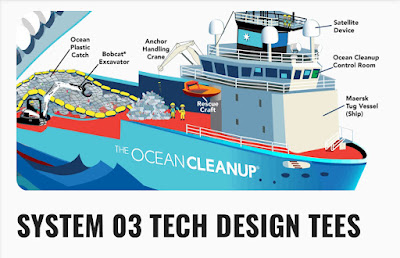
This design shares the basic technology of the tools used to clean the Great Pacific Garbage Patch.


3. The World Operations Map Design

This started out as a way to help me memorize the numbers of the vessels, interceptors and barriers currently deployed in 10+ countries around the world. The rainbow key helps memorize the countries in order and the layout of countries around the Great Pacific Garbage Patch is easier to memorize.


4. Kids Ocean Plastic Designs from 2011, Remastered


I worked as a volunteer art teacher to help 3rd graders learn about environmental art. One of the projects we did was all about ocean plastics and the work of Judith Selby Lang and Richard Lang in Point Reyes, California. I was excited to remaster these designs to show that they could still support the work of The Ocean Cleanup. 

As I have explained the gradeschool project to many before, we placed a large, blank canvas of white poster paper before teams of 4 kids and asked them to design any marine animal or species affected by ocean plastics. They had to use pieces of plastic my sons collected at the beach, as well as some of the plastic we borrowed from the Langs organized studio collection of beach plastic. 

The kids did absolutely incredible work in just 30 minutes or less. We provided some books for reference ideas, but all groups managed to come up with completely different animals and designs. It was a project that eventually raised funds for Music and Arts in the schools. 

Today, I was able to reuse most of the designs for kids Τ-shirt concepts for TheOceanCleanup.com I think the kids who worked on these more than ten years ago would be delighted to see their art used to help support the work of the world's largest cleanup of ocean plastics.

I hope you will have a look at the designs online here. Thank you for supporting the work of The Ocean Cleanup.


UN Ocean Conference 2025 in Nice, France 🇫🇷 June 9-13th

 June 9, 2025


Today’s design update coincides with the UN Ocean Conference 2025 in Nice, France 🇫🇷 June 9-13th. TheOceanCleanup.com has an exciting press release and new update coming at this event, Wednesday, June 11 at 12 noon. Please check the UN 🇺🇳 Ocean Conference website for schedule and video links:

UN OC 2205 Conference Schedule: http://webtv.un.org/en/schedule

My latest design update adds cranes 🏗️ to the System 03 Maersk vessel, and labels to explain the parts of the ocean plastic capturing system. I was inspired to do this because I remembered two favorite Τ-shirts my sons had when they were in grade school... Shirts with bold firetrucks on a solid-colored background, and labeled with all the parts of the firetrucks. I thought this idea would work great for The Ocean Cleanup vessels. This is the start to that design idea.


Please see my previous posts in 2025, below...– all work in progress on unique and educational T-shirt and concept designs for The Ocean Cleanup, with links to donate to my ongoing, cycling fundraiser and how to get involved with the work of cleaning our worlds oceans of plastic. Thank you! -Colleen

World Environment Day 2025 - June 5th

June 5, 2025 

Happy World Environment Day!


Today's design update honors the whales. 🐋 🐋 🌊🌊🌊🌊🌊🌊


Please visit TheOceanCleanup.com for more info on how you can help with the mission to remove 90% of the world's ocean plastics by 2040.

... or simply donate to my on going cycling fundraiser, here.

Thank you! -Colleen 

The Ocean Cleanup System 3 Retention Zone Τ Shirt Design

 June 4, 2025 

The Ocean Cleanup System 3 Retention Zone Τ Shirt Design


This may be my favorite so far. It reminds me of the t-shirts my sons had as grade schoolers with firetrucks and school buses on them. Just a bright, solid colored background, with the design wrapping around the field of color, so the front of the vehicle was on the front of the shirt, and the back of the vehicle was on the back side. They loved them! See the next post, below for more details about this design project.

Vector Τ shirt Designs for TheOceanCleanup.com

 May 30 - June 3, 2025

The last week in May was a good week for design! After all the research and Google Sheets I made in March to help me memorize the locations of the Ocean Cleanup vessels and barriers around the world, I finally feel like that research has paid off with some beautiful and simplified vector art designs. Thank you to Adobe Illustrator, for always being my go to for vector art illustration for over twenty years.

Here are the results! Please see my previous post for more info on this project. Visit TheOceanCleanup.com to learn more about how you can help remove 90% of the world's floating ocean plastics by 2040. 

Donate to my fundraiser for the Ocean Cleanup by clicking here

Thank you! -Colleen


This work eventually lead to an additional 3rd design idea, with the 2 ships from System 3 that clean The Great Pacific Garbage Patch, and the Retention Zone that captures the plastic.


Design 3: System 3 with Retention Zone full of plastic and fish underneath


I updated the design of the camera skiffs with solar panels which float on top of the Retention Zone netting or plastic capturing bag. It was interesting to learn that the white buoys which make up the circle at the front of System 3 are HUGE! About 3 men (or women!) could sit on top of them like riding a horse. The yellow buoys on the Retention Zone are smaller. Something you could pick up in your hands, like a large beach ball. The camera skiffs are also quite large, like a small raft that 4 people could stand on top of.


I then added the flags of the Netherlands 🇳🇱, where The Ocean Cleanup was founded by Boyan Slat and corporate headquarters currently reside, and the flag of Norway 🇳🇴 for the Maersk shipping company that makes the vessels. I added lights to the front of the vessels, and it made me think of Pixar. Lights are important!


This panoramic image would make a great recycled polyester beach towel. Many companies now used recycled plastic in their apparel, often 50 % recycled combined with 50% organic cotton, creating a soft and comfortable new product.


The marshmallow looking objects are actually satellite communication devices inside a marshmallow-shaped, weatherproof shell from Cobham Sat Marine.

Image from System 2 Team by Sailor Cobham Communications Device


Design 3 with lights, flags & motor boat @ Retention Zone (square)


Τ Shirt Design for TheOceanCleanup.com

May 2025

Hi Friends, Family and Ocean Lovers!

T-shirt design by Colleen M. Proppé for The Ocean Cleanup

This past week, I have been inspired to design an idea for a Τ-shirt for The Ocean Cleanup. I saw they were having a contest, but forgot about it because I have been very sick for a couple weeks and lost my ability to cycle and my sense of taste. I am starting to get better, but my taste buds are not there yet. I am now very curious as to how the body heals taste buds... but regardless, I started to design something for The Ocean Cleanup, a global nonprofit that I have been fundraising for the past couple of years. Donate to my ongoing cycling fundraiser to help clean our World's Oceans, here! (Thank you! All proceeds go directly to TheOceanCleanup.com)

This nonprofit is dear to my heart because of my passion for the ocean, travel and environment. They are doing extraordinary work, currently working with ten countries to remove river plastics that would otherwise end up in our oceans, and also, continuing their work to remove floating plastics from the Great Pacific Garbage Patch.

In February and March, I created a spreadsheet and color-coding system to help me memorize the numbers of all the vessels and barriers in the nine plus countries around the world. You can view that here.

Data Viz by C.Proppé for TheOceanCleanup.com Feb-March 2025 (Click image to view)

This month, I took that information and transformed it into this Τ-shirt design which shows all the countries where The Ocean Cleanup is removing and recycling plastics. It is a full rainbow of colors, so I used the rainbow as a learning tool.

Designs by C.Proppé for TheOceanCleanup.com May 2025 (Click image to view)

This is a work in progress in Adobe Illustrator that started out as a hand-drawn sketch and is now using a limited palette in the vector-based software I have been using for more than twenty years. I wanted to try to retain some of the hand-made quality to the art, but I am now leaning towards making the full System 3 ship in vectors as well as the other sea animals, so I can be more flexible with these design assets in the future. I still need to upgrade my iPad so I can draw on a screen again... but for now, this is where I am. 

I hope you enjoy this design. It reminds me of the illustrations in David Macauley books, or simply, a children's illustrated book. I used to work for companies that made children's educational products. I think this is a bright and fun design for kids and grown ups too. Please visit TheOceanCleanup.com for more info.

Click here to see my updated vector art designs for the Τ shirt in the next blog post.


Design by C.Proppé for TheOceanCleanup.com May 2025 (Click image to view)

Restore Stamford Lighthouse Fundraiser

 Ocean Friends!

I would like to offer you a selection of my “90’s retro” Lighthouse and Sailing paintings and more recent Organic “apparel “Lighthouse emoji” Designs, all with a percent going towards the restoration of the Stamford Lighthouse. These family favorites, my original oil paintings, have never before been offered as prints or art gifts!


🖼️ Red Lighthouse Painting

https://fineartamerica.com/featured/red-lighthouse-in-maine-portland-headlight-colleen-proppe.html


🖼️ Blue Lighthouse Sunset

https://fineartamerica.com/featured/bass-harbor-lighthouse-sunset-colleen-proppe.html?product=framed-print


👕Kids’ Organic Lighthouse Hoodie 

https://cproppe.com/shop/kids-eco-hoodie


🧢Organic Lighthouse Baseball Cap 

https://cproppe.com/shop/organic-lighthouse-baseball-cap


⛵️Lake Tahoe King’s Beach Sailboats 

https://fineartamerica.com/featured/lake-tahoe-sailboats-colleen-proppe.html


🎨CProppé Paintings

https://cproppe.com/paintings


You may also purchase or commission a new painting with a percentage going back to the lighthouse. I started painting a lighthouse sunrise scene of the Stamford Lighthouse from my hometown beach this month. Here are a couple photos from painting day one, where I was just starting to lay out large areas of color.


Thank you for your support!


Learn more about the Stamford Lighthouse Project at StamfordLighthouse.org